8 Essential Tips to Protect Your Pets from Noise, Sweets, and Decorations: Pet Care During Festivals
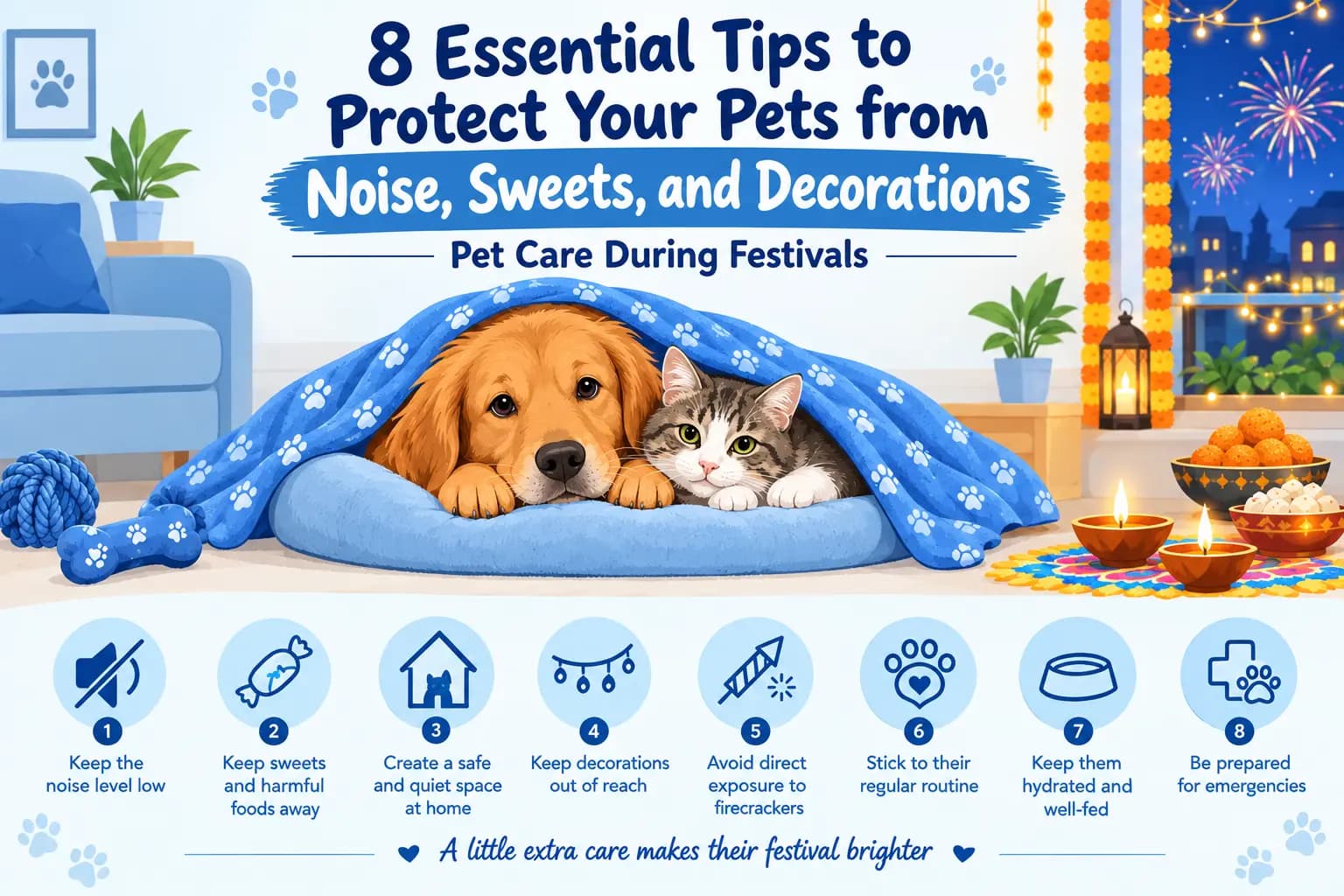
Every year it’s the same scene in a lot of homes. Diwali lamps are lit, relatives are arriving, the kitchen smells of ghee and sugar, and somewhere under the sofa a dog is shaking because a neighbour just set off a string of crackers. Festivals are lovely for people. For pets, they’re often a week of noise, odd smells and unfamiliar faces.
You don’t need to cancel anything to keep them safe. Most festival trouble with pets can be avoided with a bit of planning. These are the pet care tips for the festive season we keep repeating to pet parents at Deepet, and they apply whether you have a Labrador, a street-rescued cat, or a rabbit.
1. Set Up a Quiet Room Before the Guests Arrive
Pets need a place to escape from everything. It is much easier to set this up before the chaos begins than during it. Choose a room far from the door and the kitchen. Put a bed for the pets, a blanket that smells like home, water and a couple of toys. Close the curtains, shut the door and keep a fan or soft music running so outside noise is less loud. After a day or two most pets will go there on their own when things become too much.
2. Don’t Underestimate Firecrackers
A cracker is a quick bang to us. A dog hears it much louder and sharper, and cats and small pets can find it terrifying. Walk your dog in the afternoon before the evening rush of crackers. Make sure they’ve been to the toilet before it gets dark. Never leave a pet tied up outside or alone on a terrace. Scared pets may run away or hide. Many reports of pets going missing during festivals start this way . If your pet trembles, drools, hides or paces every year, call your vet a week ahead and ask what can help. Waiting until the night itself is too late.
3. Keep Sweets and Festive Snacks Away From Them
At festival vet visits the main issue is food. Chocolate can be toxic to dogs and cats. Some sugar‑free sweets carry xylitol, which can kill in very small doses. Raisins and grapes harm a dog’s kidneys and onion and garlic in savoury snacks are bad for them too. Fatty, ghee‑rich food can cause vomiting, diarrhoea or pancreatitis. It may seem harmless when a guest offers your dog a piece of barfi.Even small amounts of these foods can add up to a health risk. Kindly tell visitors that your pet has its food, keep plates off low tables and close the dustbin tightly. If you want your pet to feel part of the fun give it a treat of its own.
4. Check Your Decorations at Pet Height
Try this: sit on the floor for two minutes and look around. You’ll spot things you never noticed. Tinsel and ribbons look like toys but can cause a blockage if swallowed. Fairy light wires are tempting to chew and can give a bad shock. A wagging tail can knock over a diya or candle in seconds. Some flowers and garlands are also toxic to pets, lilies being a well-known example for cats. Tape down loose wires, move candles to high shelves, and keep small ornaments out of reach. It takes five minutes and can save you an emergency trip at midnight.
5. Watch the Front Door
With guests coming and going the door stays open more than usual. Pets can slip out when no one is paying attention. Even a kind dog can get upset by a group of excited people. When visitors arrive, keep your pet in a quiet room or on a leash in a calm area. Make sure they are wearing a collar with an ID tag and update the microchip information if they have one. Also talk to the children: no chasing, no pulling tails and no surprise hugs.
6. Keep Their Routine Mostly Normal
Between shopping, cooking and cleaning, walks and meals tend to slip. But pets rely on routine more than we realise, and a pet who’s been properly exercised copes with noise far better than one who’s been shut in all day. Try to keep feeding times roughly the same and still fit in a decent walk or play session, even if it’s a short one.
7. Book Boarding Early if You’re Travelling
A lot of families go back to their hometowns for the festival, and taking a pet on a long journey into a crowded house isn’t always fair on them. In that case, pet boarding services during the festival can be a good solution, as long as you choose well. Look for a clean facility with proper supervision, regular meals, exercise, and prompt access to veterinary care. Festival dates fill up quickly, so book weeks ahead and, if possible, visit first. Tell the staff about your pet’s diet, medicines and habits so they can care for them the way you would. That’s what we aim to provide at Deepet: peace of mind for you and comfortable care for your pet.
8. Look at Festive Pet Care Packages
If you’d rather not arrange everything separately, festive pet care packages can make life easier. They usually combine services such as boarding, grooming, a health check and playtime in a single plan. A wellness check before the festival can pick up small problems early, and supervised care during the celebrations means someone’s always keeping an eye on your pet. Deepet’s packages are built around the pet’s age, temperament and needs, so you can pick what suits you, whether you’re staying home or going away.
Frequently Asked Questions
Why do pets get stressed during festivals?
Pets notice more than we do. Loud noises, smells, new people and a broken routine can all leave pets anxious. Even if pets are usually calm, pets can still feel stressed.
Which festive foods are most harmful to pets?
Chocolate, xylitol‑sweetened foods, grapes, raisins, onions, garlic, macadamia nuts and very oily or sugary snacks are the ones. If you are not sure, do not share those foods with pets.
How do I keep my dog calm during fireworks?
Give your dog a quiet room away from the noise. Close the curtains, play soft music, and stay with your dog if possible. Never scold your dog for being scared. Exercise your dog earlier in the day, and consult your vet if the fear is severe.
Can I leave my pet alone at home during the festival?
It is best not to leave your pet alone, especially on nights when firecrackers are being used. If you must leave your pet at home, ensure they have access to a quiet, secure room and fresh water. Arrange for someone you trust to stay with your pet or consider pet boarding services.