Banned Dog Breeds in India: Complete Guide for Pet Parents
Introduction
Dogs are among the most loved companions in India. From small apartment-friendly breeds to large guard dogs, many families choose dogs as their trusted companions and treat them as part of their family. However, choosing a dog breed is not only about appearance or popularity. Pet parents should also understand the breed’s temperament, care requirements, training needs, and legal considerations.
In recent years, there has been significant discussion around banned dog breeds in India and certain breeds that have been considered difficult to manage without proper training and responsible ownership. Many pet parents are searching for information about which dog breeds are restricted, why certain breeds have received attention, and what owners should know before adopting or purchasing a dog.
This guide explains the topic of dog breeds banned in India, the reasons behind breed restrictions, responsible pet ownership, and important healthcare considerations for maintaining a safe and happy relationship with your dog.
Why Are Certain Dog Breeds Restricted?
Dog breed restrictions are generally introduced due to concerns related to public safety, irresponsible breeding practices, improper training, and misuse of powerful breeds. A dog’s behaviour depends on several factors, including genetics, socialisation, environment, training, and how responsibly the owner manages the pet.
Large and powerful dog breeds require proper handling, exercise, socialisation, and professional guidance. Without proper care, any dog, regardless of breed, may develop behavioural issues.
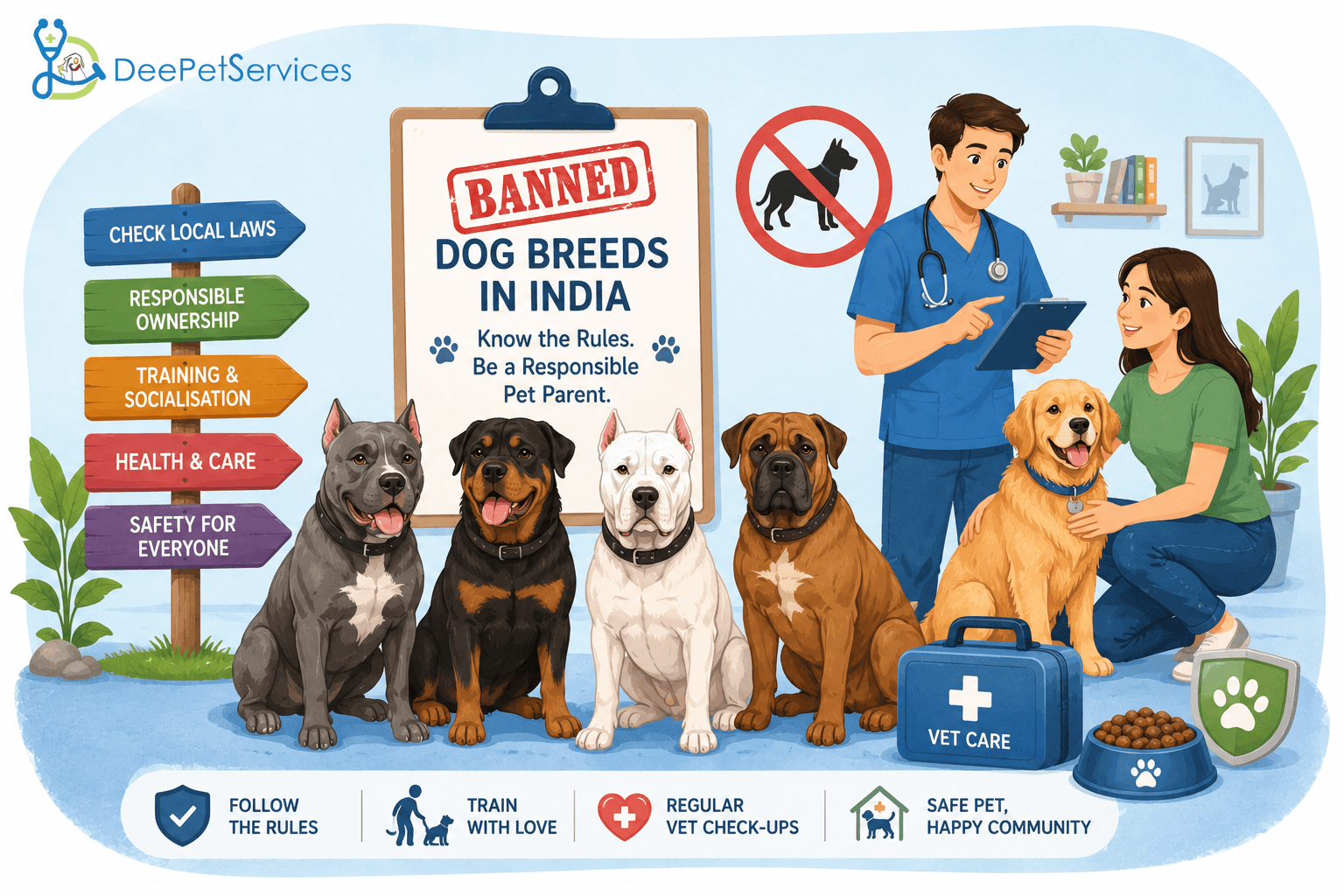
In 2024, the Department of Animal Husbandry and Dairying issued an advisory recommending restrictions related to the import, breeding, and sale of certain breeds described as “ferocious” or dangerous, including their crossbreeds. The advisory included breeds such as Pitbull Terrier, Rottweiler, Dogo Argentino, American Bulldog, Mastiffs, and others.
Pet parents should always check the latest local regulations before adopting or purchasing any breed because rules can vary by location.
List of Dog Breeds Mentioned in the 2024 Advisory
The 2024 advisory included several breeds that attracted attention because of their size, strength, and history of use in protection or fighting activities.
Some commonly discussed breeds include:
Pitbull Terrier
Rottweiler
Dogo Argentino
American Bulldog
American Staffordshire Terrier
Tosa Inu
Fila Brasileiro
Cane Corso
Boerboel
Mastiff breeds
Kangal
Central Asian Shepherd Dog
Caucasian Shepherd Dog
South Russian Shepherd Dog
Rhodesian Ridgeback
Akita
Wolf Dog hybrids
These breeds are known for their strength and require experienced handling, proper training, and responsible ownership.
Are These Dogs Dangerous?
A common misunderstanding is that a particular breed automatically means a dog is aggressive. This is not always true.
A dog’s behaviour depends heavily on:
Training
Socialisation
Living environment
Exercise routine
Healthcare
Owner responsibility
A well-trained and properly socialised dog can become a loving family companion. At the same time, irresponsible ownership, neglect, lack of training, or encouraging aggressive behaviour can create problems with any breed.
Responsible pet parenting plays a major role in preventing behavioural issues.
Importance of Training and Socialisation
Every dog needs proper training from an early age. Training helps dogs understand boundaries, respond to commands, and interact safely with people and other animals.
Large breeds especially benefit from:
Early socialisation
Positive reinforcement training
Regular exercise
Mental stimulation
Consistent routines
Professional guidance
Pet parents should understand that owning a powerful breed requires commitment. Dogs with higher energy levels need sufficient activity and attention to remain healthy and balanced.
Healthcare Needs of Large Dog Breeds
Large dog breeds often have specific healthcare needs. Regular veterinary check-ups help identify health concerns early and maintain overall well-being.
Common areas that require attention include joint health, weight management, nutrition, vaccinations, skin health, and preventive care.
A veterinarian can guide pet parents about:
Suitable diet plans
Exercise requirements
Parasite prevention
Behaviour-related concerns
Routine health monitoring
Regular veterinary support is an important part of responsible dog ownership.
Choosing the Right Dog Breed for Your Family
Before bringing a dog home, pet parents should consider their lifestyle rather than choosing a breed only because it looks attractive.
Important questions to consider:
Do you have enough time for training and exercise?
Is your home environment suitable for the breed?
Can you provide proper healthcare and nutrition?
Do you understand the breed’s behaviour and needs?
A smaller breed may be more suitable for apartment living, while active breeds may require larger spaces and more physical activity.
The best dog is not always the most popular breed; it is the breed that matches your lifestyle and ability to provide proper care.
Responsible Pet Ownership Matters More Than Breed
Every pet owner has a responsibility to ensure their dog is safe, healthy, and properly managed.
Responsible ownership includes:
Providing proper food and healthcare
Training and socialisation
Following local rules
Using safe handling practices
Understanding your dog’s behaviour
A loving and responsible environment helps dogs become confident and well-adjusted companions.
How Deepet Services Helps Pet Parents
At Deepet Services, we understand that every dog has unique needs. Whether you have a puppy, adult dog, or senior companion, maintaining good health requires proper veterinary guidance.
Professional veterinary support helps pet parents make better decisions about nutrition, vaccinations, preventive care, and overall wellness.
Regular check-ups and timely medical attention help ensure your dog enjoys a healthy and happy life.
Final Thoughts
The discussion around banned dog breeds in India highlights the importance of responsible pet ownership. Choosing a dog is a long-term commitment that requires understanding, care, training, and proper healthcare.
Instead of focusing only on breed popularity, pet parents should consider temperament, lifestyle compatibility, and their ability to provide the necessary care.
With proper training, responsible handling, and regular veterinary support, dogs can continue to be wonderful companions for families.
Frequently Asked Questions
1 Which dog breeds are banned in India?
Certain breeds were included in a 2024 advisory regarding restrictions on import, breeding, and sale, including breeds such as Pitbull Terrier, Rottweiler, Dogo Argentino, and others. Regulations may vary by location and should be checked with local authorities.
2 Are Pitbulls completely banned in India?
The legal status of Pitbulls depends on current regulations and local implementation. Pet owners should check updated government and municipal guidelines before making decisions.
3 Are banned dog breeds aggressive by nature?
No. A dog’s behaviour depends on training, socialisation, environment, and responsible ownership. Proper care and professional guidance play a major role.
4 What should I consider before buying a dog?
Consider your lifestyle, available space, time for training, exercise needs, healthcare requirements, and whether you can provide responsible lifelong care.
5 How often should I take my dog to a veterinarian?
Regular veterinary visits help maintain your dog’s health. Puppies, senior dogs, and dogs with medical concerns may require more frequent check-ups based on veterinary advice.