How to make vet visit stress free for pets?
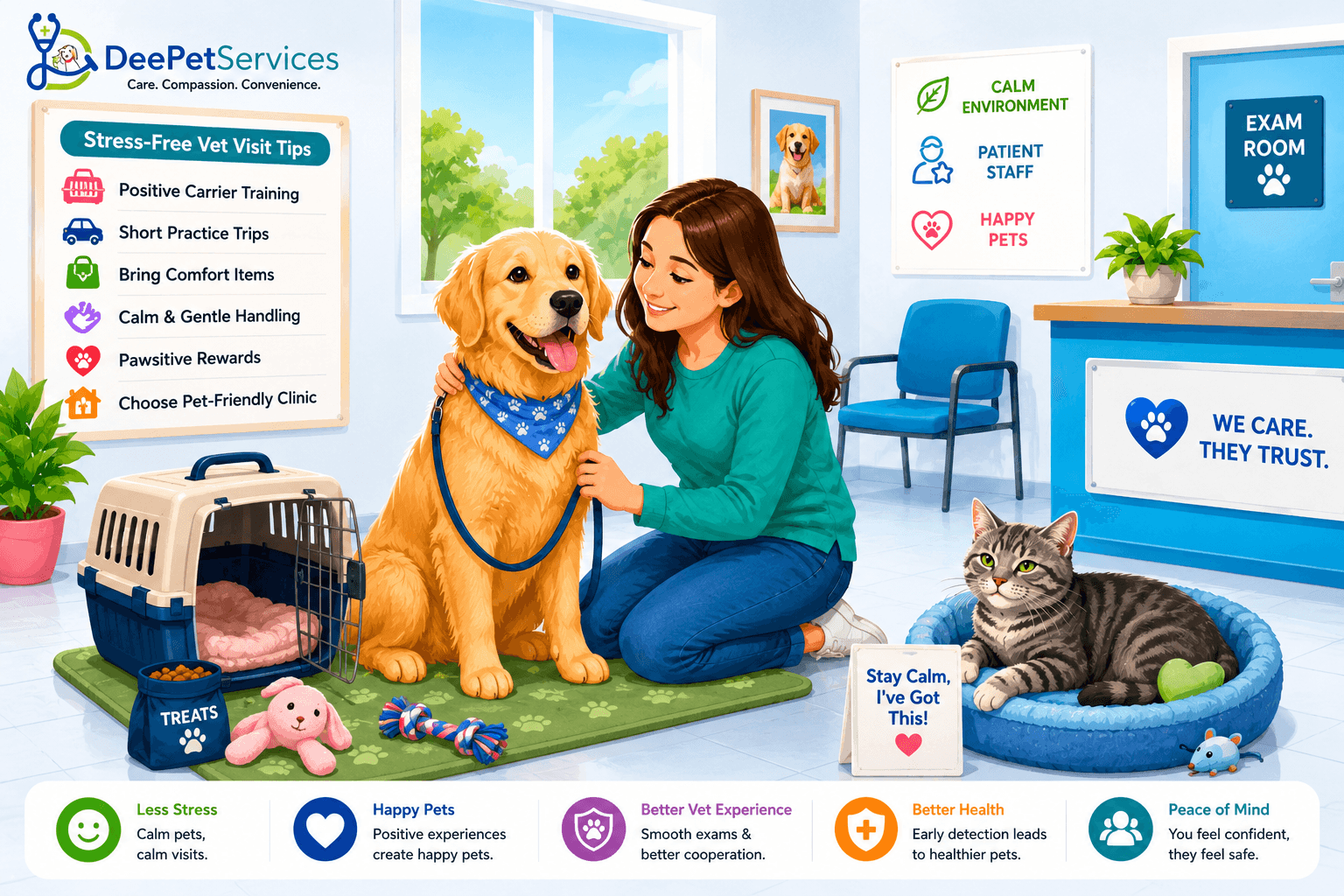
Vet visits play a vital role in ensuring your pet enjoys a long, healthy and high quality life. Regular veterinary checkup help prevent diseases, monitor overall well-being, and early detection of potential health diseases. These visits may include routine checkup, pet vaccinations, regular blood tests, addressing specific health concerns or even emergency care when needed. Routine vet visits help catch problems before they become life-threatening. Keeping your fur baby veterinary care at priority not only increases their quality of life but also gives you peace of mind, knowing they are receiving the best possible medical attention.
However, visiting the vet can be really scary and stressful for both pets and their parents. It can cause anxiety and other behavioral issues in pets. Fortunately, there are ways to make vet visits comfortable like positive reinforcement training, crate training, considering a vet home visit in Delhi NCR for pets that feel anxious during travel, and online vet consultations.
Why do pets fear vet visits?
Our pets don’t fully understand why they are at the vet clinic or that it’s for their own wellbeing. They may feel confused or uneasy in an unfamiliar environment. Past experiences, such as being restrained, handled by strangers, or receiving injections, can create anxiety in dogs. The sight of needles or memory of previous visits may trigger stress, making them fearful or resistant.
Pets experience anxiety at the vet for several reasons:
- Unfamiliar smells and sounds- The clinic may have many kind of unfamiliar scent like smell of other dogs and cats or any other animal, medicine, stranger people scent and loud noises of other pets, machines, people which can be overwhelming for your fur baby.
- Unusual sight of other pets
- Being handled by strangers
- Negative memories related to past experiences like pain or stress
- Discomfort while travelling- some pets feel nausea, or some pets travel only for vet visits which makes them uncomfortable and hateful to travel.
Signs of anxiety in pets:
- Inability to relax or pacing
- Aggressive or defensive behavior
- Excessive vocalization or whining
- Excessive panting or drooling
- Trembling or seeking shelter
- Tucked tail or Flattened Ears
- Avoiding eye contact
- Stress induced excessive shedding
- Escape or trying to flee
- Reluctance to move
- Repeated Lip licking or Yawning
Since they cannot comprehend the reason behind these visits, it’s important to make their experience as calm and positive as possible.
Getting ready for the Vet: Pre-visit Preparation tips
- Getting your pet comfortable with a Carrier: To help your fur baby become accustomed to their carrier, start by leaving it out in a familiar space at home with the door open. Place soft bedding inside, along with their favorite toys and treats. This will encourage them to see the carrier as a safe and positive place. You can also spray pet calming or pheromone sprays inside the carrier to help create a more relaxing environment. For cats, sprinkling a little catnip inside can entice them to enter, making it even more inviting. The key is to make the carrier a space where your pet feels comfortable and secure. When they go inside, reward them with treats to reinforce this positive association. Over time, and with some gentle training, your pet will begin to view the carrier as a safe haven rather than a source of stress. For maximum comfort, choose a carrier with a lid that can be fully opened. This allows your pet to stay in the bottom of the carrier, making them feel less confined and more at ease. If you have a larger dog, consider using a harness instead of a collar. A harness provides more control over their body and reduces the strain on their neck, especially if they tend to pull on the leash. This can help alleviate stress during the trip to the vet and make the experience smoother for both you and your dog.
- Familiarize your pet with Car Travel: To help your pet become comfortable with car travel, avoid giving them heavy meals before the trip. Start by taking them on short, enjoyable rides to pet-friendly parks or restaurants. After each ride, reward your pet with treats to create a positive association with car travel. This gradual approach will help them feel more at ease during longer journeys, including trips to the vet.
- Desensitize your pet to handling: To help your pet feel more comfortable during vet visit, start desensitizing them to being touched in ways they might be handled at the clinic. Gently handle their paws, ears and mouth, mimicking the motions of a typical vet exam. Throughout the process, offer treats and praises to reinforce positive behavior and create a calm association with being touched in these areas. By doing this regularly at home, your pet will become more relaxed and less stressed when it’s time for their vet visit.
- Stay calm and reassuring: Your fur baby can sense your emotions. If you are stressed or anxious, your pet will also be stressed and anxious. So try to stay calm, comfortable and confident.
What to do at the vet clinic;
- Schedule appointment during quiet hours: Try to book your appointment at a time when the clinic is less crowded. Fewer pets in the waiting area can help reduce stress and anxiety for your fur baby.
- Use positive reinforcement: Give your pet a reward both before and after the vet visit. This helps them associate the experience with something positive, making future visits easier.
- Make casual vet visits: Take your pet to the clinic for non-medical visits, such as a simple weight check or a friendly greeting with the staff. Let them explore the space, receive affection, and enjoy a stress-free experience. This reduces the chances of negative association and makes future vet visits much smoother.
- Inform the staff about your pet’s triggers: Let the clinical staff know in advance about your pet’s triggers and fears. This helps them handle your pet with care and avoid unnecessary stressors.
- Consider calming aids: If your pet experiences high anxiety, talk to your vet about calming aids such as tablets or sprays. Always use these under veterinary supervision to ensure safety and effectiveness.
Consider at home vet visits
If your pet experiences extreme anxiety at the clinic, then home vet visits can be really game changing experience for you. Many veterinary services offer home vet visits for routine checkups, pet vaccinations, minor health concerns, treatments. Home vet visits will allow proper medical care for your fur baby at the comfort and familiarity of your own home.
Try online vet consultations
For minor issues, you can always select online vet consultations making it a stress free alternative.